The steady rhythm of beeping monitors, the hushed intensity of an operating room, the controlled chaos of the ER – for two decades, these sounds and scenes have played out within the iconic walls of Grey Sloan Memorial Hospital. But what exactly are those walls made of, and how does The Architecture and Layout of Grey Sloan shape the very fabric of the stories we've come to love? It's more than just a backdrop; it's a meticulously crafted character in its own right, designed to facilitate drama, intimacy, and the relentless pace of a medical institution.
At a Glance: Decoding Grey Sloan's Design
- Fictional, Yet Familiar: Grey Sloan isn't a real hospital you can visit, but its design is rooted in real-world medical architecture principles.
- Storytelling First: Every corridor, every room, is strategically designed to enhance dramatic narratives and character interactions.
- A Living, Breathing Set: The hospital's layout has evolved subtly over its long run, adapting to new storylines and production needs.
- Blending Realism and Practicality: Set designers balance the need for medical accuracy with the demands of television filming.
- Iconic Locations: Certain areas like the OR gallery, the On-Call Room, and the helipad have become instantly recognizable symbols of the show.
More Than Just a Hospital: The Set as a Character
From the moment Meredith Grey first walked its halls as an intern, Grey Sloan Memorial (formerly Seattle Grace Hospital) has been the crucible where dreams are forged, relationships tested, and lives saved—or lost. But few viewers stop to consider the deliberate architectural choices that make this fictional hospital feel so incredibly real. The production team behind Grey's Anatomy has crafted an intricate, multi-level set that acts not merely as a stage, but as an active participant in the unfolding narrative. Its sprawling, yet surprisingly intimate, layout funnels characters into collisions, forces difficult conversations, and provides stark contrasts between the sterile efficiency of medical procedures and the raw emotion of human experience.
This isn't about mere aesthetics; it's about functionality, flow, and the psychological impact of space. The design dictates where characters meet, where secrets are whispered, and where monumental medical breakthroughs occur. Understanding the layout enriches your viewing experience, helping you appreciate the subtle genius behind one of television's most enduring sets.
The Ground Floor: Chaos and First Impressions
Imagine walking into Grey Sloan as a new patient or an intern on their first day. You'd likely start on the ground floor, a meticulously designed area that balances controlled chaos with crucial services.
The Emergency Room (ER): The Beating Heart
The ER is undoubtedly the most dynamic space in Grey Sloan. Its design reflects the relentless, unpredictable nature of emergency medicine. Large, open bays allow for multiple concurrent storylines, with curtains offering fleeting moments of privacy. The central nurses' station acts as a command center, providing a vantage point for staff to monitor incoming trauma and direct patient flow.
- Open Floor Plan: Facilitates rapid movement of gurneys and personnel, crucial for high-stakes emergencies.
- Visible Trauma Bays: Allows viewers to witness multiple medical situations simultaneously, emphasizing the ER's constant demand.
- Strategic Exits/Entrances: The ambulance bay doors are a dramatic focal point, signaling new crises and the constant influx of life-and-death situations.
The constant hum, the flashing lights, the urgent shouts – all of this is amplified by a set designed for rapid transitions and a high volume of activity. It’s here that many character arcs begin, under the harsh fluorescent lights of diagnosis and immediate intervention.
Admitting and Waiting Areas: The Gateway to Care
Just beyond the ER doors, you'd find the admitting desk and various waiting areas. These spaces, while less dramatic, are critical. They serve as the buffer between the outside world and the intensity within, often becoming sites for anxious families, stressed residents awaiting news, and occasionally, the first tender moments of new relationships. The design here tends to be slightly softer, with more seating and a less clinical feel, providing a temporary sanctuary.
Above Ground: Specialized Care and High Stakes
As you ascend through Grey Sloan, the layout shifts from immediate crisis management to more specialized and long-term care, each floor and department having its own architectural nuances.
Operating Rooms (ORs) and Viewing Galleries: The Core of the Drama
The operating rooms are, perhaps, the most hallowed spaces in the hospital. Designed for sterile efficiency, they are where the series truly shines, showcasing complex medical procedures. What's often overlooked is the design of the viewing galleries above the ORs. These glass-enclosed spaces allow attending surgeons, residents, and even family members to observe surgeries without compromising sterility.
- Tiered Seating: Ensures clear sightlines into the OR below, essential for teaching and dramatic observation.
- Soundproofing: Separates the observers from the intense concentration within the OR, highlighting the different emotional states.
- Strategic Lighting: The bright, focused lights on the operating table draw the viewer's eye directly to the medical action, while the gallery itself remains subtly lit.
These galleries aren't just for medical observation; they're often where crucial character development occurs, where mentors impart wisdom, and where the raw tension of surgical outcomes plays out on the faces of those watching.
Patient Wards and Rooms: Intimacy and Recovery
Moving away from the immediate intensity of the ORs, the patient wards offer a different architectural experience. Here, the focus is on privacy, comfort (within hospital limits), and spaces conducive to recovery and difficult conversations. While many patient rooms look similar, subtle design choices contribute to their role in the narrative.
- Single/Double Occupancy Rooms: Allow for intimate dialogues between patients, doctors, and families.
- Window Views: When available, offer a visual connection to the outside world, a symbol of hope or longing.
- Nurses' Stations: Act as hubs for each ward, designed for visibility and immediate response to patient needs.
These rooms are often the backdrop for deep emotional processing, where characters confront their mortality, grieve losses, or forge unexpected bonds. The relatively confined nature of these spaces forces intimacy, both welcome and unwelcome.
The On-Call Room: A Sanctuary (and a Secret Keeper)
No discussion of Grey Sloan's architecture would be complete without mentioning the iconic on-call rooms. These small, often cluttered, spaces are designed for exhausted doctors to grab a few hours of sleep, but they've become famous for far more than that. Their secluded nature and limited space make them ideal for whispered confessions, clandestine meetings, and, famously, romantic rendezvous.
- Compact Design: Emphasizes the doctors' demanding schedules and the scarce moments of rest.
- Lack of Windows: Reinforces the idea of a hidden, private space, cut off from the watchful eyes of the hospital.
- Minimalist Furnishings: A bed, a small desk – all that's truly needed for a brief respite.
The on-call room represents a crucial escape valve within the high-pressure environment of the hospital, a place where professional facades often crumble.
The Social and Scientific Hubs: Cafeteria, Labs, and Conference Rooms
Beyond the direct patient care areas, Grey Sloan boasts several other key spaces that contribute significantly to its overall functionality and narrative depth.
The Cafeteria: The Great Equalizer
The hospital cafeteria is a bustling common ground, a place where attendings, residents, nurses, and support staff temporarily shed their hierarchical roles to grab a bite or a coffee. Its open, often noisy, layout fosters spontaneous interactions, making it a prime location for exposition, character banter, and casual confessions.
- Open Seating: Encourages mingling and allows for dynamic group scenes.
- Central Location: Accessible to all departments, reinforcing its role as a hospital-wide gathering spot.
- Realistic Feel: Mimics the often-functional, less-glamorous aesthetics of a real hospital cafeteria.
Many a crucial conversation, a budding romance, or a tense argument has unfolded amidst the clatter of trays in Grey Sloan's cafeteria.
Labs, Imaging, and Research Facilities: The Scientific Backbone
Tucked away from the clinical hustle are the specialized labs, imaging suites (MRI, CT scans), and research facilities. These areas, often depicted as sterile and technologically advanced, highlight the scientific rigor and cutting-edge medicine practiced at Grey Sloan. Their architecture emphasizes precision, controlled environments, and specialized equipment, often featuring glass partitions that allow for visual transparency while maintaining separate functional zones.
- Clean Lines and Modern Equipment: Conveys a sense of scientific authority and advanced capabilities.
- Controlled Access: Suggests the importance and sensitivity of the work conducted there.
- Specialized Zones: Each area (e.g., pathology lab, genetics lab) has specific design elements tailored to its function.
These departments underscore the hospital's commitment to innovation and are often the setting for medical mysteries and groundbreaking discoveries.
Conference Rooms and Attending Lounges: Power and Planning
These spaces are where the hospital's leadership gathers, where major medical decisions are debated, and where the hierarchy of the medical staff becomes most apparent. Conference rooms typically feature large tables and presentation screens, designed for formal meetings and case discussions. The attending lounge offers a slightly more relaxed, yet still professional, environment for senior staff to decompress or strategize.
- Formal Layout: Conveys authority and the gravity of the decisions made within these walls.
- Strategic Seating: Often used to visually represent power dynamics and alliances.
- Access to Information: Whiteboards, screens, and patient charts are often visible, reinforcing the focus on medical data.
These areas are vital for showcasing the administrative and collaborative aspects of running a major hospital, and for exploring the professional politics that shape the doctors' careers.
The Iconic Exterior and Rooftop: Looking In and Looking Out
While much of the show takes place on carefully constructed sets, the exterior shots of Grey Sloan Memorial are instantly recognizable and play a significant role in establishing the hospital's presence.
The Exterior: A Real-Life Landmark
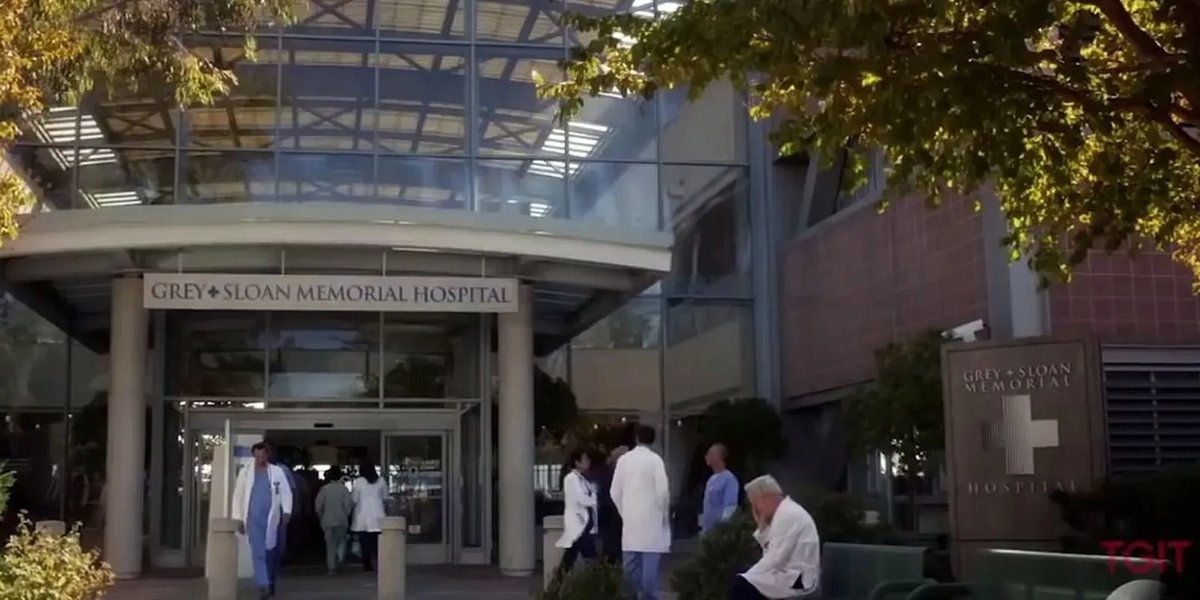
The exterior of Grey Sloan Memorial Hospital is actually a real building: the Veterans Affairs Sepulveda Ambulatory Care Center in North Hills, California. Using a real hospital for exterior shots lends an undeniable authenticity to the fictional setting. The imposing structure, with its modern architecture, immediately grounds the show in a believable reality, making the transition to the studio sets feel seamless. This visual anchoring is crucial for maintaining the illusion of a fully functioning hospital. To learn more about how real locations blend with fictional narratives, you might want to Explore Grey Sloan Memorial and its fascinating evolution.
The Helipad: Sanctuary and Spectacle
The helipad atop Grey Sloan is perhaps one of the most emotionally charged locations. It's the point of arrival for critical trauma patients, often signaling a dramatic new storyline. But it's also a place of profound solitude and reflection, offering sweeping views of the Seattle skyline (though often augmented with special effects).
- Vast, Open Space: Creates a sense of vulnerability and exposure to the elements, contrasting with the enclosed hospital interior.
- Panoramic Views: Symbolizes perspective, escape, and moments of quiet contemplation amidst the chaos below.
- Arrival/Departure Point: Marks significant transitions in patients' lives and doctors' careers.
Many heartfelt conversations, moments of grief, and declarations of love have unfolded under the open sky on Grey Sloan's helipad, making it a visually stunning and emotionally potent architectural feature.
Behind the Scenes: The Architecture of Illusion
The magic of Grey Sloan isn't just in its on-screen appearance, but in the intricate thought process and construction that brings it to life. Set designers, guided by showrunner Shonda Rhimes' vision and a keen understanding of medical environments, have built a multi-story set that prioritizes both realism and the practicalities of television production.
According to insights from Architectural Digest, the sets are meticulously designed not just to look like a hospital, but to function for filming. This means:
- Removable Walls: Many walls are designed to be easily moved to accommodate camera angles and lighting equipment, allowing for dynamic shots that would be impossible in a rigid structure.
- Sound Stage Ingenuity: The vast majority of the interior shots are filmed on sound stages in Los Angeles, allowing for complete control over lighting, sound, and environment. This contrasts sharply with the challenges of filming in a genuine hospital.
- Continuity and Evolution: Over two decades, the set has seen subtle changes. Rooms might be re-dressed for different departments, or new sections added as the hospital expands its services or its cast of characters. This organic evolution reflects the growth and changes within the fictional institution itself.
- Medical Accuracy: While concessions are made for drama, the production team works closely with medical consultants to ensure that equipment, procedures, and the general flow of a hospital feel authentic. This commitment to detail is crucial for maintaining viewer trust in the medical narratives.
The brilliance lies in creating a space that feels utterly convincing, despite its origins as a constructed environment on a studio lot. Every door, every corridor, every specific piece of medical equipment is carefully chosen and placed to serve the overarching story.
Common Questions About Grey Sloan's Architecture
Q: Is Grey Sloan Memorial a real hospital?
A: No, Grey Sloan Memorial Hospital is entirely fictional. The exterior shots are of a real hospital building in California, but all interior scenes are filmed on elaborate sound stages.
Q: Where is Grey Sloan Memorial supposed to be located?
A: In the show's canon, Grey Sloan Memorial is located in Seattle, Washington. While the show features establishing shots of Seattle landmarks, the actual filming takes place primarily in Los Angeles.
Q: How do they make the surgeries look so real?
A: The production team employs a combination of medical consultants, prop teams, and special effects. They use realistic prosthetics, animal organs (like cow hearts for anatomical accuracy), and carefully choreographed procedures. The architecture of the ORs, with their specific lighting and equipment, helps sell the illusion.
Q: Has the hospital layout changed over the seasons?
A: Yes, subtly. While the core layout of major areas like the ER and ORs remains consistent for continuity, specific departments might be added or reconfigured, and rooms might be redressed to serve different narrative purposes over two decades of storytelling. The hospital has also undergone changes in name (Seattle Grace, Seattle Grace Mercy West, Grey Sloan Memorial), reflecting its changing ownership and status.
Your Next Visit to Grey Sloan
The next time you tune into Grey's Anatomy, try looking beyond the intense medical cases and dramatic personal lives. Pay attention to The Architecture and Layout of Grey Sloan. Notice how a character’s position in a room—perched on the edge of a bed, leaning against a sterile counter, or framed by the vastness of the helipad—enhances their emotional state or their interaction with others. Observe how the flow of a scene is dictated by the corridors and entrances.
Grey Sloan is more than just a setting; it's a meticulously designed world, crafted with purpose to amplify every whisper, every triumph, and every tragedy. Its walls hold countless stories, and by understanding their blueprint, you unlock a deeper appreciation for the artistry behind television's longest-running medical drama.